



How to drive change in people and organizations?

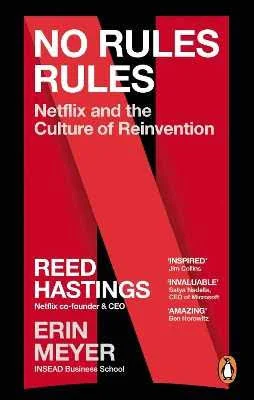
When it comes to organizational change, one of the most interesting recent books is undoubtedlyWhen it comes to organizational change, one of the most interesting recent books is undoubtedly No Rules Rules by Reed Hastings, founder and CEO of Netflix. In it, Hastings explains how he helped transform the organization into a place capable of attracting top performers by striking a very clear pact with them: top-of-market salaries, stellar performance, minimal rules and processes, and radical honesty (which, in that context, translates into a generous severance package).
This must be understood not only within the cultural context of the US and Silicon Valley, but also considering the company’s core mission: how do you exponentially grow a creativity-based business without being overwhelmed by entropy?
So, how do leaders guide their people through this balance?
The recipe was freedom and responsibility.
In other words, Netflix adopted and promoted a business model built on people’s freedom to make quick, autonomous decisions, providing them with the right contextual information so that those choices could be made responsibly. The author is keen to emphasize that while this approach works exceptionally well in a creative environment, it doesn’t apply to others – such as hospitals or manufacturing plants – where fixing mistakes is far more costly than preventing them.
Creative environments must enable individuals to constantly take ownership of risks and decisions, which in turn must be backed by a consistent approach to leadership.
In our previous article, “A New Leadership for a New Way of Working” we discussed the Lean Lifestyle Company model – an organization where it is possible to pursue excellent results while simultaneously fostering deep well-being.
A Lean Lifestyle Company encourages a new way of working designed to break down compromises that are often seen as inevitable in business, such as “vision vs. short-term results,” “efficiency and productivity vs. workplace well-being,” and “coordination vs. energy and engagement.”
In this article, we look at how to answer the question: “which levers – and therefore, which style – can we use to drive change in our people toward becoming a Lean Lifestyle Company?”
7 Levers to Foster Change
There are seven levers a leader can use to achieve the desired change within a company:
- Information
The leader shares valuable insights about the organization’s performance with their team members, helping them understand the ultimate purpose behind the requested actions.
- Expertise
The leader has worked their way up from the ground floor and possesses deep technical knowledge of the subject, which they use to support team members in executing their tasks.
- Leading by Example
The leader represents a “better” model that others aspire to, setting the standard by practicing what they preach.
- Legitimacy
Whether in Lean or Western culture, the leader drives behavior through their superior hierarchical position or titles that justify their leadership role.
- Reward Power
The leader motivates team members through rewards within their power to grant (monetary incentives, visibility, recognition, etc.).
- Connection
The leader gains consensus by connecting team members with influential or interesting people.
- Coercion
The leader forces consensus through veiled threats.
The Lean Lifestyle Company and Developing Full Human Potential
In the Lean Lifestyle Company model, leaders motivate their team members to gain consensus and drive desired behaviors primarily through the first four of these seven levers. In contrast, in a “more traditional” company, the final four are the ones most heavily relied upon by leaders.
Within a Lean Lifestyle Company model, it is dysfunctional to foster a culture where the boss is someone to obey, rather than a customer to serve or a mentor to learn from. For the leader, the team member becomes a partner, but above all, a student, someone whose learning, growth, and, first and foremost, skill development they are responsible for.
To make this happen, leaders must cultivate their own ability to lead by example, becoming a model for their team to aspire to, thereby triggering a process of emulation.
A Lean Lifestyle Company cares deeply about developing full human potential. For this reason, it leverages delegation to help managers and team members grow by entrusting them with new responsibilities. The focus is on the autonomy of individuals and working groups, aimed at creating an “army of problem solvers” within the company capable of resolving issues right where they arise, rather than relying on centralized decision-making.
These considerations on how to guide people through change must be deeply integrated even when attempting to adopt lean principles in a company. Some businesses claim to be “lean” simply because they use tools like Kanban, Obeya, or 5S. However, looking beneath the surface of these tools, one often realizes that many of these organizations – at every level of their org chart – are not led by lean leaders’ intent on developing that army of problem solvers mentioned earlier. Unfortunately, this is a very common contradiction.
Organizations often end up disrupting their structure by introducing numerous lean tools to be more competitive, while completely ignoring the habits of their leaders. These leaders remain accustomed to managing teams in a directive, and in some cases, even dictatorial manner.
Shifting toward lean tools and philosophies requires a voluntary contribution from team members in terms of ideas, proposals, and going beyond their strict job descriptions. Therefore, transforming leaders and leadership models remains the prerequisite for transforming team members.
Article written by:
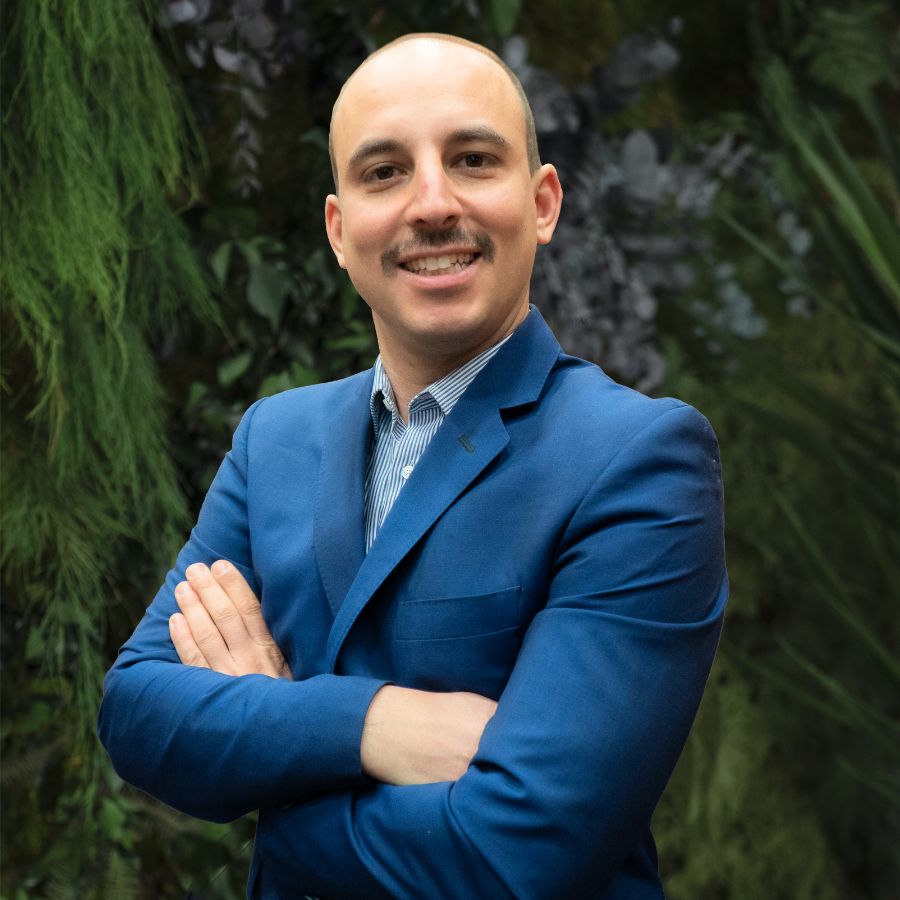
Alessandro Valdina
Principal
His academic background spans Communication, Finance, and Applied Behavior Analysis. His areas of expertise cover Reorganizations, Change Management, Strategy Deployment, Lean Office, Performance Management, Leadership Development, and Training Technologies.
Having joined Lenovys in 2017, he is active in management consulting, corporate training, and public speaking. Since 2025, he has been producing “Io so’ io e voi non siete…” (“I am who I am and you are not...”), a newsletter and podcast exploring the relationship between power and corporate organization in Italy, offering Lean and Agile insights for improvement.
Read more


Upcoming events