





Getting lost in imaginary problems

In a Lean transformation journey, management seeks to build a culture of problem-solving. To achieve this, people learn not to place blame on individuals, to analyze the root causes of problems before tackling them, and to use evaluation matrices… but often, no one warns us about a common pitfall: finding problems even where none exist.
From a psychological standpoint, this happens for two reasons:
- Over-reinforcement: if, within my company, those who bring up problems (and solutions) are valued, then – just to get attention – I am willing to find them even where they don’t exist. This leads to placing undue weight on results or behaviors that the company has already deemed sufficient, but that look improvable from my perspective. I have realized that this is the only way to gain visibility (and – politely – throw shade on my colleagues).
- Anchoring: The other psychological reason is a cognitive bias known as the anchoring heuristic. Let’s try to explain this with an example: we have established that all our sales reps only need to know 5 phrases in Chinese to greet clients from the Far East. Even if everyone achieves this goal, in our minds, the moment 2 colleagues learn 10 extra words, everyone else suddenly seems to fall short because our “anchor” has shifted. But they are not falling short, because we had already determined that 5 phrases were sufficient to then cultivate our relationships and negotiations in Chinese. It takes a split second to find ourselves gossiping about those who only know how to say “good morning, good evening, and 3 other little things” (a “non-problem”) and proposing a 120-hour Chinese course for everyone—which would certainly not be enough to negotiate in the language anyway (a “non-solution” to a “non-problem”).
To prevent these effects within a company, it is essential to learn how to operationally define behaviors that drive expected results (known as “pinpointing”). When leaders master this, it becomes easy for their teams to understand when an actual problem exists.
By doing so, members of the same working group begin to view reality through criteria that are, if not identical, at least very similar.
Otherwise, the risk is calling meetings – and launching projects – that are merely ending in themselves, because the problem doesn’t exist anywhere except in our own heads.
Some call it over-quality or over-engineering, and it represents a form of waste within Lean manufacturing culture, just like defects and unnecessary motion.
4 steps to effective pinpointing
- Identify all undesired events or outcomes within the organization that are mainly driven by wrong behaviors: defects, customer complaints, lost bids, drops in equipment efficiency or effectiveness, breakdowns, jams, workplace injuries, etc.
- Assemble a team of top performers, ideally those who hold some leadership among their peers: they are the only ones who know the tricks of the trade that lead to the best results.
- Have the team analyze each individual event to identify—first and foremost—the dysfunctional behavior that caused that undesirable outcome, and subsequently define the efficient, quality, safe, or sales-driven behavior functional to the desired result.
- Include the identified functional behaviors in a checklist and test them in the field using two observers, to verify whether an action recognized by one is equally recognized by the second.
At that point, you can confidently say you have a behavioral metric that minimizes observer subjectivity; next, it will be necessary to establish a process for monitoring, feedback, and reinforcement.
It sounds simple when put this way, but these are intense days of analysis where a behavioral expert makes all the difference.
Beware of the 3 traps
To operate properly defines behaviors that drive expected results and bring actual problems to light, we must recognize – and avoid – 3 common traps in the corporate world. Let’s find out what they are:
1. Prescribing attitudes
Lazy is not a behavior. This is the title of chapter 5 in Aubrey Daniels’ Performance Management , a handbook on applied behavior analysis in the workplace that has sold half a million copies across its 5 editions.
The author illustrates how crucial it is for performance to eliminate all vagueness and room for interpretation from instructions, procedures, recommendations, signs, and monitoring checklists. Objectivity and observability are the mantras that a behavior analyst repeats when trying to drive change.
As long as a manager labels an employee as “lazy,” the probability of getting what they truly want from them remains low. It drops to zero if that manager—lacking the social skills to say it to the employee’s face—only vents about it at the coffee machine with whichever colleague happens to be around.
What does “lazy” mean, then? “He arrives late,” “She misses deadlines,” “When unloading, he doesn’t volunteer to help colleagues,” “She challenges project assignments,” “He dumps long business trips onto coworkers,” and so on.
Only once the target behavior is defined can we observe it, measure it, provide feedback, and motivate our colleague to adopt effective behaviors.
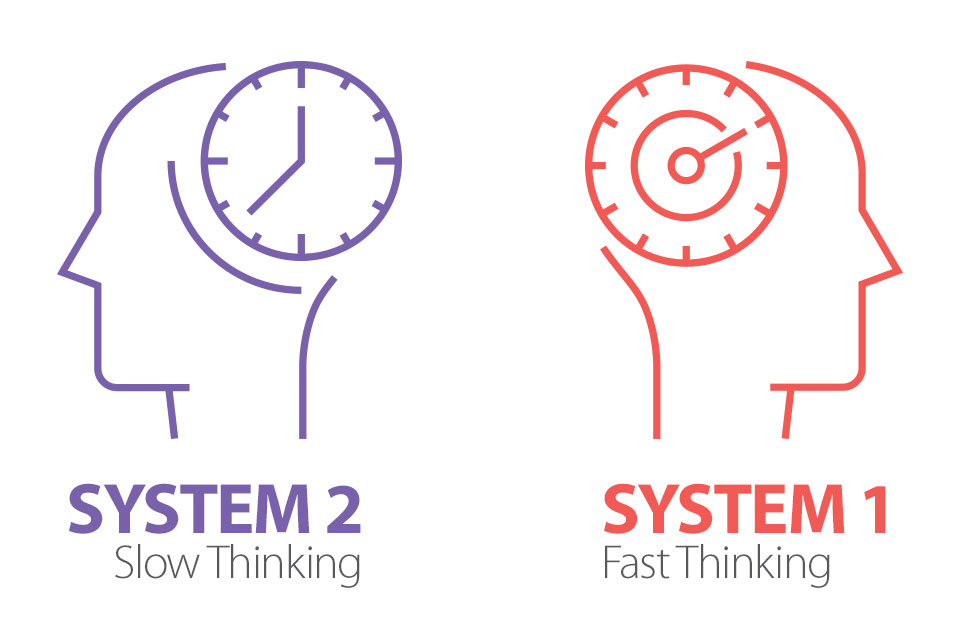
When a leader slaps a label on an employee or colleague – or judges them through a stereotype – they are stripping themselves off the opportunity to help them improve. Sometimes they don’t even want to improve them, because they’ve already written them off. It’s a mental shortcut, what Kahneman, the Nobel laureate in economics, defines as fast thinking.
Sometimes these summary judgments about people allow us to make quick decisions. For instance, during a negotiation, we need to understand who our buyer is and identify their decision drivers based on just a few clues, labeling them as “cheap” or “prestige-seeking” to know which levers to pull for our pitch.
However, when it comes to employee development, we are dealing with a strategic, long-term activity; therefore, slow and rational thinking is far more effective.
Because, as Stefano Massini illustrates in this humorous tale, when
we slap a label on someone, we risk making huge blunders and remembering them for the wrong thing, just like Monsieur de La Palice. He went down in history not for his bravery in battle, but for a platitude he never even said (his distorted funeral epitaph read, “If he were not dead, he would still be envied,” which was misread as “he would still be alive”).
2. Useless recommendations
Speaking of platitudes, much like parents waving their child goodbye with a vague “be good,” giving recommendations or advice to employees without first pinpointing behaviors is another mental shortcut managers often fall into.
When it comes to changing or guiding behavior, phrases like “Don’t get distracted,” “Pay attention,” “Make sure you focus,” “Be more proactive,” “Stay safe,” or “Keep your eyes on the prize” are exhortations that, due to their vagueness, have a very low probability of triggering the actual action the manager had in mind. In fact, they often become irritated by the person receiving the instruction because of their sheer banality.
Here are a few examples of how to operationally redefine generic instruction like “Pay attention”:
- To avoid sending poorly written texts to clients: Run the spell-checker before hitting send on an email;
- To prevent non-compliant parts from moving forward: Keep your eyes on the conveyor belt and place the dimensioned drawings of the part right next to the pantograph.
These are specific actions that, once tested in the field, a manager should integrate into their OPLs (One Point Lessons) or department procedures. They are not the product of simple common sense, but rather the result of a thorough analysis of the undesired outcomes occurring in that specific context (typos, production defects, workplace injuries, etc.) and the precise behaviors that make a difference on the job.
3. Prohibitions
“It is forbidden to forbid.” This slogan from 1968 can help remind us that we must provide prescriptions, instructions, and advice on what to do, rather than what not to do.
There are two reasons for this, which we can illustrate with two examples from parenting:
- If you tell your child, “Don’t eat the chicken with your hands,” there is no guarantee they will use a knife and fork the way you want them to. They might just spear the chicken leg with a fork like a spit and start tearing into the meat like a caveman.
- If you ask your pre-teen child not to use bad language, you will be driven to punish them when they mess up, rather than—pardon the paradox—reinforcing them when they use an innocent “Oh my goodness!” after falling off their bike.
Overloading company regulations or instructions (OPLs, SOPs, etc.) with prohibitions is ineffective. Prohibitions do not explicitly describe the desired behaviors; instead, they shift the focus of behavioral management toward progressive discipline (verbal warnings, written warnings, suspensions, etc.), with obvious negative repercussions on the workplace climate and industrial relations.
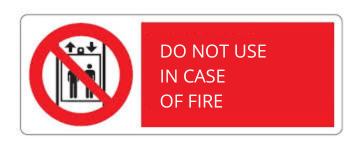
Safety training often provides us with excellent bad examples. How many times do we read signs next to an elevator saying, “Do not use the elevator in case of fire,” or in front of electrical panels, “Do not extinguish flames with water”?
Granted, those behaviors are certainly extremely dangerous and must be avoided; however, those signs don’t tell you to use the stairs or follow the green lights, nor do they tell you to use a CO2 fire extinguisher.
When we find ourselves in an emergency, we don’t have the time to figure out what not to do. This is why we have already developed,
meaning personal and organizational reflexes that allow us to rely on fast thinking for commonplace problems, thereby freeing up our brain’s energy for slow, strategic thinking.
Article written by:

Alessandro Valdina
Principal
His academic background spans Communication, Finance, and Applied Behavior Analysis. His areas of expertise cover Reorganizations, Change Management, Strategy Deployment, Lean Office, Performance Management, Leadership Development, and Training Technologies.
Having joined Lenovys in 2017, he is active in management consulting, corporate training, and public speaking. Since 2025, he has been producing “Io so’ io e voi non siete…” (“I am who I am and you are not...”), a newsletter and podcast exploring the relationship between power and corporate organization in Italy, offering Lean and Agile insights for improvement.
Read more


Upcoming events