


Innovation is nothing without control
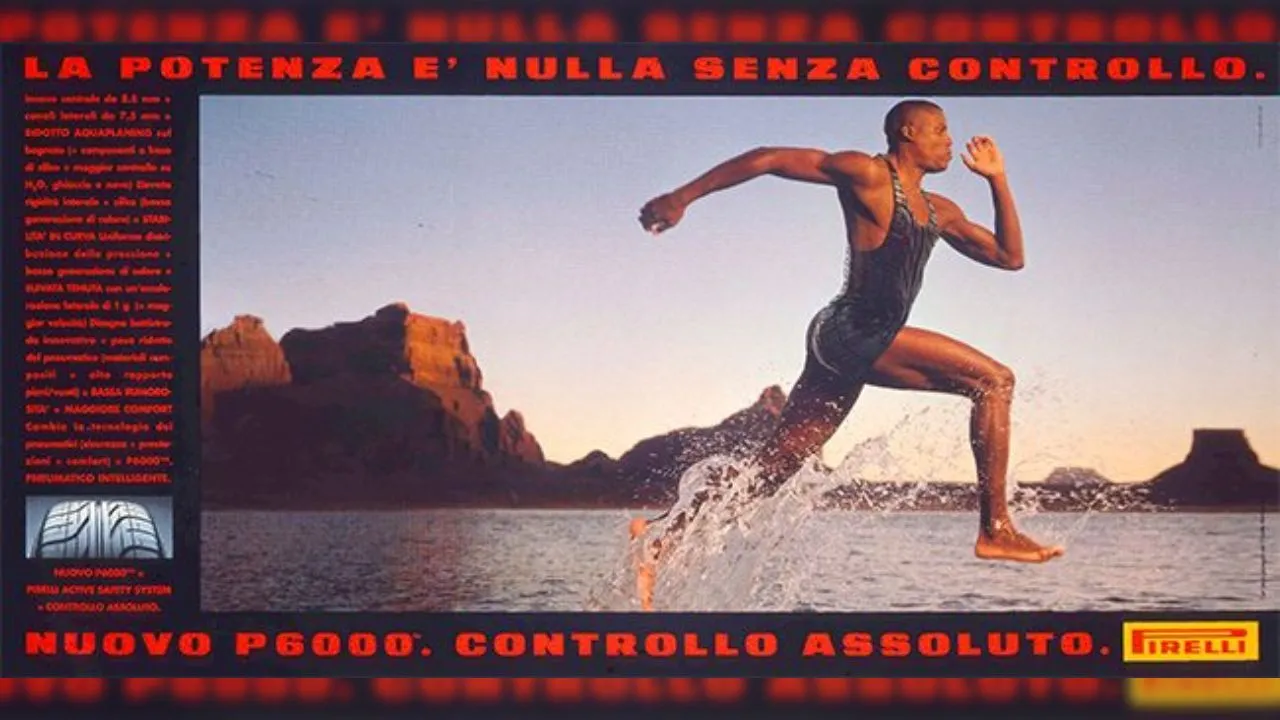
“Power is nothing without control.”
Those who are old enough will still remember it: a famous commercial from a well-known tire brand.
It’s not an invitation to hold back power, nor to “monitor” it. It’s a call to harness it to the fullest, thanks to the grip and performance that the tire makes possible. Without this ability to govern power, all that strength would end up in a spin, not in speed.
The same applies to innovation within a company: innovation is nothing without control.
Without something to ground innovative capacity, transforming it into motion rather than an engine idling in neutral, all the talent within the company goes to waste.
A familiar story
You might recognize this story. It’s not the story of a specific or famous company. It’s the story of many organizations I’ve encountered over the years: that of a company that wants to innovate, that wants to leverage the talent of its people, that seeks new ideas.
However, a structure is lacking:
- No strategic clarity: no one has clarified which problems, technologies, or opportunities are truly worth exploring. The result? Anyone with a new idea must first struggle to convince someone that the topic deserves attention.
- Lack of dedicated budget:anyone proposing something new must compete for resources designed for day-to-day operations, allocated with criteria suited only to already familiar projects.
- Opaque governance: it isn’t clear who should make decisions, based on what criteria, and within what timeframe.
- Absence of experimentation routines: every idea must appear solid, cost-effective, and almost proven from the start, with no opportunity to be tested on a small scale.
- Poor alignment with the market:decisions are mainly based on internal beliefs, rather than on dialogue with customers or market signals.
In a company like this, talent is not missing: there is a powerful engine.
What’s missing is the right tire to put that power onto the ground.
Innovation without the right tires
Now think about what people who proposed an idea might feel when faced with one or more of the obstacles mentioned above. The feeling is a bit like having a powerful engine, their own talent, without having the right tires to make it perform at its best.
In such a context, only those who are extremely determined will decide to dive into developing an innovation.
💡 The Hoover Case: when the system selects only those who fight
In 1992, Hoover UK launched an irresistible promotion: anyone buying appliances worth at least £100 would receive two free airline tickets to the United States. Demand was enormously higher than expected.
To contain costs, Hoover began turning the process of getting the tickets into an obstacle course: forms declared incomplete, lost claims, complex procedures, and extended delay times.
For many customers, persisting became more costly than the expected benefit, and they gave up. Some, however, did not surrender: they founded a protest group (Hoover Holidays Pressure Group), coordinated their actions, and forced the company to deal with the issue.
The key point? The system was not distinguishing between who was right and who was wrong. It was distinguishing between those who were willing to fight and those who were not.
Talent is not lacking: the innovation misconception
When innovation doesn’t happen, we tend to think that creative, enterprising, or motivated people are lacking. But that is a misconception: talent generates ideas even in the worst systems.
The real problem is what happens to those ideas after they are born.
Without direction, without dedicated resources, without decision-making criteria, and without experimentation, a person with a good idea is forced into exhausting actions:
- They must organize themselves and build consensus on their own.
- They must find political sponsors.
- They must “resell” the idea department by department.
- They must overcome delays and objections, constantly producing proof, while those opposing them only need to raise doubts.
Every now and then, someone succeeds. They have the energy, position, and stubbornness required to turn an idea into a personal crusade.
But when only the most persistent people manage to move an idea forward, the company isn’t leveraging talent: it is selecting fighters. Most people, on the other hand, have no intention of launching a corporate “protest movement” every time they spot an opportunity.
This is one of the quietest forms of waste in a company. In Lean methodology, we call it unused talent. In flow innovation logic, it is caged innovation.
Why do we give up sooner than expected
There is a precise reason why people stop proposing ideas. Daniel Kahneman, Nobel laureate and author of Thinking, Fast and Slow, calls it the law of least effort: when there are several ways of achieving the same goal, we tend to choose the least demanding one.
Effort enters human calculation as a real cost:
- In the Hoover example: every obstacle added a cost to the claim, reducing its net value until, for many, it was no longer worth persisting.
- In innovation: every extra bureaucratic step reduces the probability that a person will put their talent on the line. When the personal cost becomes too high, innovation ends up caged.
We no longer need heroism. We need tires for innovation
To avoid caged innovation, we need to create the conditions that allow people to propose, test, and develop ideas, without adding the effort of building the conditions for developing their ideas onto the effort of discovery itself.
Innovation routines serve this exact purpose and operate along four directions:
- Innovation strategy: these are routines that periodically update and align the organization on where it is worth looking, and that create dedicated pathways for both more radical and more incremental ideas.
- People: these are exploration routines that make it normal to look beyond one’s role, experimentation routines that allow testing without having to convince anyone first, and energy regeneration routines. Because no one can sustain a personal crusade for long, no matter how motivated they are.
- Process: these are routines that systematically generate ideas without relying on the initiative of a few, that give an idea time to mature instead of judging it prematurely, that replace opinion with evidence, and that scale what works beyond the person who created it.
- Ecosystem: these are routines that allow testing the most uncertain initiatives without having to prove the result in advance, that clarify decision-making criteria, responsibilities, and timelines, and that prevent an idea from having to be resold department by department.
When these routines exist before the idea arrives, talent stops using its energy to get permission to start. It can be used to explore, experiment, learn, and develop what works.
Routines are the tire of talent: the surface that allows all that power to turn into real motion, rather than an engine idling in neutral.
- The question to ask in a company is not: “Do we have enough talent?”
- The real question is: “Do we have the right tires to make it run?”
📌 Do you want to transform your company’s talent into concrete innovation?
Discover the Executive Master Impact Innovation, a management training program with a practical and results-oriented approach.
Article written by:

Gabriele Colombo
Know How & People Development
He has developed his skills especially in the field of innovation according to the logic of design driven by applying the concepts in the area of research and development in companies of international character. He was responsible for the definition, planning and execution of research and consultancy programmes related to the world of innovation and continuous improvement; His experience is added to the role of teacher of Project Management and Innovation Management in courses dedicated to business executives at the School of Management of the Politecnico di Milano.
Partner of Lenovys since 2021.
Read more

Upcoming events