




Strategy Execution: when winning is everything, not just participating
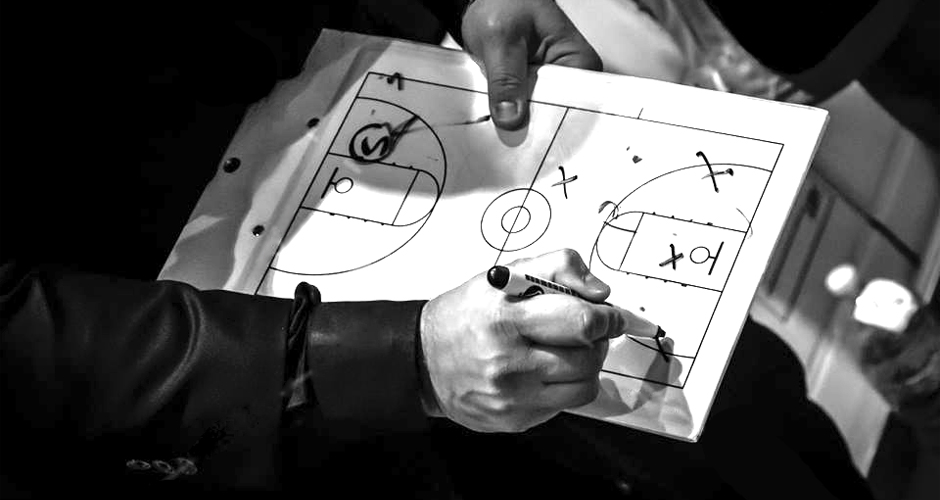
Every single one of us has used or heard the famous motto, “The important thing is not winning, but taking part,” at least once.
It is just another way to remind we that in sports, as in life, you cannot always win, and you must learn how to lose gracefully.
In its original sense, however, this motto carried a slightly different meaning.
According to some, the motto made famous by Pierre de Coubertin, founder of the modern Olympic Games, was first quoted by a Greek philosopher who said: “The important thing is not winning but taking part with a winning spirit.”
And it is precisely this “winning spirit” that makes all the difference in the world when it comes to strategy.
Strategy is nothing other than an integrated set of choices to win in the market by creating a sustainable competitive advantage and superior value compared to the competition.
You cannot build a strategy on the belief that the important thing is just taking part. It simply doesn’t work. Just look at the numbers.
According to a recent study by Mckinsey, the top 10% of companies capture 80% of profits, while the remaining part records profits close to zero or even negative.
Furthermore, aiming to win is fundamental when building a strategy. To win, in fact, you are forced to make choices: to choose what to focus on and what to leave behind, and to focus investments on specific areas rather than scattering them across different tables just to have a seat.
Making choices, which are sometimes difficult, hard, and painful, to win is the very essence of strategy. Setting goals or defining plans just to “take part” in various markets is a dangerous path that often leads to failure.
The difficulty in executing and putting strategy into practice effectively
Most Italian entrepreneurs are used to and adept at making decisions. This is how they built their businesses: through a series of correct decisions executed quickly. However, when the company grows, a problem emerges.
The time it takes to implement decisions lengthens, in many cases rendering the decision itself useless.
It is a true paradox. The more successful you have been in the past by growing rapidly, the harder it becomes to maintain that speed – both in executing decisions and, consequently, in executing strategy – which had contributed so much to the initial success.
The difficulty of effectively implementing and executing strategy is one of the primary challenges businesses face today.
This leads to a progressive loss of competitiveness, eventually taking a toll on operational performance as well. In the long run, the inability to achieve set targets and goals steadily reduces the well-being of people within companies. This creates a negative spiral and a vicious cycle that further diminishes the ability to execute strategy, given that it is now a proven fact that people’s well-being and business performance go hand in hand.
Consequently, it becomes difficult to innovate, prosper, and – in the worst-case scenarios – even just survive.
How is it possible, then, to execute strategy in an effective and winning way, combining higher performance and greater well-being? Thanks to years of working alongside entrepreneurs and managers, we have developed a system for executing strategic projects capable of combining process elements with leadership elements.
Here are the 5 main elements.
1. Create a shared strategy and make it clear and explicit
The first step to executing a strategy effectively is making it clear and shared.
Many entrepreneurs have a clear strategy in their heads, but the organization does not know it or only knows it in part. In this case, it is difficult for the strategy to be executed effectively.
A highly effective way to formalize, share, and clarify strategy is Hoshin Kanri.
Hoshin Kanri is a management process that aligns an organization’s functions and activities with its strategic goals.
It is a framework for reasoning and action that connects an organization’s strategic goals to the specific projects needed to achieve them, to the people responsible for implementing them, and to the key indicators that need to be improved.
If the strategy is not clear and shared, it can hardly be executed quickly and in a coordinated manner by the various functions of your organization.
2. Empower your people: they are responsible for execution
Identifying strategic projects allows you to distribute the responsibility for strategy execution from the entrepreneur to a wider group of people, whether they are managers or team members.
Entrust each project to one person, sharing the goals to be achieved but letting them define how to achieve those goals. This step is crucial!
If team members do not believe that the goals are achievable, or that the methods to reach them are appropriate, you run a major risk: you risk having most of the effort and energy spent on proving that the goals were wrong or that the methods to achieve them were incorrect. Doing so diverts precious energy from executing strategic projects and slows down their completion.
3. Create cadence and urgency
This is a fundamental point. Strategic projects often suffer from a common problem: because they are strategic, they are highly relevant, but since their effects manifest in the future, they risk being perceived as less urgent than daily tasks. The result is that these projects are always sacrificed due to the urgency of the moment.
If we want strategic projects to be executed quickly and successfully, we must create a sense of cadence and urgency.
The best way to do this is to establish regular cadences where project teams meet, and above all, periodic cadences (usually monthly) where project managers meet with top management to review project progress.
These moments must be properly designed, and this is the task of leadership.
The first suggestion is to use standard formats for sharing information regarding project planning and progress. This keeps these meetings quick and productive.
A second suggestion is to properly design the consequences when a project is lagging or not hitting its targets.
It must be clear that projects that are delayed, or that fail to meet their goals, are anomalies that require specific corrective actions.
4. Help people grow through continuous improvement and problem-solving
There are two main reasons why strategic projects are delayed in completion or fail to produce the desired results. One, as seen in the previous point, concerns the sense of urgency and the right cadence of projects; the second refers to the skills and competencies of the people involved.
Strategic projects, in fact, require behaviors, mindsets, and actions that differ from those required in day-to-day operations.
Ways of acting that are perfectly correct in daily tasks can prove counterproductive when applied to strategic projects.
Think, for example, of how important it is, while trying to quickly resolve a production or logistics issue, to think of solutions that are feasible with the resources and knowledge the company already has. While this approach is completely consistent when tackling daily operational problems that must be solved quickly, the exact same behavior acts as a massive bottleneck when the strategic project involves developing innovative new products.
If every potential idea generated were evaluated based on whether it is feasible with the resources and knowledge available today, it would be highly unlikely to generate high-impact innovations capable of achieving strategic goals.
Therefore, during periodic project progress meetings, it is crucial for leadership to recognize the root causes of delays and bottlenecks, and to support people’s growth by fostering structured problem-solving and deep reflection on the causes that are slowing down the project or hindering goal achievement.
5. Lead by example and make things happen
This is a fundamental point where top management must exercise its leadership.
Whatever system is chosen for project execution, top management must demonstrate that they are 100% committed to it.
If, for example, monthly project review cadences have been set, and top management is the first to skip or postpone that date, what message will that send to team members? Leading by example is crucial to making things happen and making them happen quickly.
An example that occurred with one of my clients during those challenging days surrounding the spread of COVID-19 is emblematic.
Despite the virus-related emergency, the entrepreneur insisted on holding, rather than canceling, the periodic strategic project review meeting, even though it was converted to a remote format via conference call. It was an exemplary way to lead the team by example toward achieving strategic goals.
As you can see, for a strategic project management system to be effective and efficient, it is necessary to combine process elements with leadership elements to achieve greater results and greater well-being!
Read more


Upcoming events