



Three pillars of people development to combine performance and well-being

The world of work has changed, and the leadership model is no longer simply “the boss commands, the employees execute.”
In today’s rapidly evolving landscape, companies, managers, and their teams are required to adapt, change, and innovate at an ever-increasing pace. In this context, people development has become a vital and indispensable element for any manager aiming to keep up with the times and work sustainably.
Entrepreneurs and managers now need to be supported by individuals who are experts, effective, and autonomous in problem-solving, people who are truly capable of reaching their full potential.
Why is people development such a central theme?
Before exploring how we can encourage and incentivize the growth of our people within the company, it is important to take a moment to reflect on the deeper motivation driving us to do so.
The modern productive world demands a different system of leadership—one that, to be sustainable, must pair high performance with deep, meaningful well-being. Every action and every strategy must keep these two overarching goals in sharp focus.
When it comes to people development, these two themes go hand in hand.
On the well-being front, we need to be supported by team members who are increasingly skilled and autonomous. This prevents us from centralizing all the work on ourselves and falling into the “workhorse syndrome.” It ensures we don’t risk sacrificing the time meant for our families, pleasures, or passions, be it sports, travel, reading, music, or theater, on the altar of our work or our company.
On the strictly professional front, we need to free up time that is perhaps currently consumed by operational tasks or troubleshooting, to dedicate more energy to strategy and to be able to look further ahead toward the long term.
The three pillars of people development
In this article, we will explore the three cornerstones for launching a people development process, one that also results in higher-quality time for managers and entrepreneurs.
In a recent online training session, I summarized the three tactics for effectively starting a team growth journey with the acronym D.P.CM:
1. D for Delegation
Learning to delegate more often and recognizing the true value of this activity. While delegation frees up our time, it more importantly provides team members with essential opportunities for growth and responsibility.
2. P for Problem Solving
How and why, we must teach our collaborators to solve problems independently. This prevents us from becoming the organizational bottleneck, stuck in the cycle of needing to be informed of every single issue and personally involved in every resolution process.
3. CM for Coaching & Mentoring
Learning to ask powerful questions that trigger a shift toward autonomy. This approach moves away from simply giving answers and instead guides people to find their own solutions.
Learning to delegate more often
Delegation is a key opportunity for our people to grow.
Until they have the chance to try, experiment, and even make mistakes, they will never be able to master what we already know how to do. After all, if we think about it, the skills we possess today are nothing more than the result of what we have learned through our own trials and errors.
Discover these three useful tips in this excerpt from the training event:
Teaching team members how to solve problems
Problem solving is often among the tasks that managers delegate the least. Sometimes, it truly seems as though problems are gravitated toward those who know how to fix them, appearing only before the same few people. However, it is also true that problems tend to attract managers who don’t know how to delegate them!
To learn how to be effective and become increasingly autonomous, our collaborators need to become experts in problem solving. This is essential for ensuring that everything runs smoothly and that processes — along with problem resolutions — become faster and more widespread at every level of the organization.
Learning to ask powerful questions
It is important to help our people grow within the company, but it is equally vital to learn how to do so efficiently. This requires reflection, finding the right challenges to drive growth and guiding our team members’ professional journeys.
Being a guide for your collaborators is a skill that must be trained and refined through constant reflection and the adoption of small, consistent behavioral habits.
In this excerpt, discover the difference between coaching and mentoring, along with three practical tips for learning how to ask powerful questions.
Article written by:
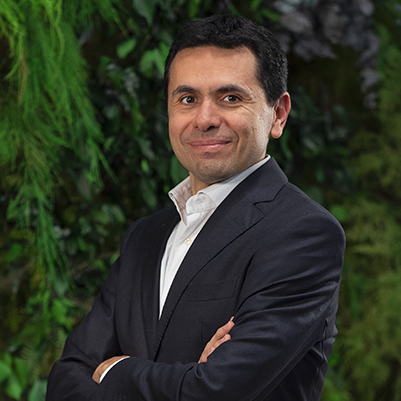
Leo Tuscano
People Development Sales
Professional Coach (ICF - International Coaching Federation) with more than 20 years of activity as consultant and trainer. He has developed a relevant experience in the application of "Lean Thinking" and "Lean Lifestyle", both nationally and internationally.
He has led numerous training programmes, teaching thousands of people in Europe, America and Asia.
Read more