




Innovation on the plate: The Era Pizza case Study
Running a catering or restaurant business has always been a complex task. It was made even more challenging by the tsunami of Covid-19, which dealt a heavy blow to the ecosystem of companies operating in the sector and permanently altered the habits and behaviors of final consumers.
In fact, while dining out is inherently tied to socializing, findings from the Covid-19 Business Check-up developed by Lenovys, show that one of the top priorities for companies in the food service industry is the need to rethink how they interact with their customers (both current and future).
Innovation plays a fundamental role in this context. Companies capable of innovating systemically by developing a value proposition that goes beyond the product itself, will gain a truly competitive advantage in the post-Covid era.
If you think well, you cook well (Ferran Adrià)
A successful innovation journey, not solely focused on the product, was developed by the Era Pizza restaurant in Monza. Together with Gabriele, one of the partners managing the restaurant, while hosted for dinner at their venue in Via Magenta, we listened to their story, analyzing their innovative entrepreneurial journey through the lens of our Impact Innovation framework.
Four partners and a business idea that earned Due Spicchi (Two Slices) from Gambero Rosso in the 2020 edition of “Pizzerie d’Italia”, the guide to the best pizzerias in our country. Era Pizza has been operating since 2017. It is a venue that has managed to innovate around a product that, in the restaurant industry, can be considered for all intents and purposes a commodity: pizza.
Creativity and method to innovate in the food service industry
The creators of this venture are two entrepreneurs already well-established in the culinary world: Gabriele Pè and Ivan Gorlani. The former has been active in the gelato industry since 2002, while the latter is an all-around chef with expertise in pastry, cooking, and baking, having worked with the likes of Stefano Fagioli and Nerio Beghi. Together, in 2010, they opened “Gelateria Mille,” which was awarded “Due Coni” (Two Cones) by Gambero Rosso. In 2016, along with two other partners, they realized there was room in the market to innovate and offer a completely different experience for a product available everywhere in the world and in every possible form: pizza. By combining their experience and knowledge, they believed they could create a new culinary value proposition that stood out from the competition. They believed that by combining two essential qualities that should never be missing in the kitchen, creativity and method, and by channeling and structuring that creativity toward a shared project, they could develop a dining concept that was both innovative and sustainable over time.
In 2017, their entrepreneurial dream became a reality. Era Pizza, experiencing steady growth in both revenue and customer base, has garnered numerous awards and accolades by championing a dining philosophy focused on evolution, research, and connection to the local territory.
The journey of this business project serves as an interesting case study in innovation. Therefore, we have analyzed it through the lens of our Impact Innovation framework to provide valuable insights and reflections for anyone operating in the food service sector.
Innovation Strategy: a pizza is not just a “pizza”
The core of Era Pizza’s high-impact proposition stems from Ivan Gorlani’s creative experimentation combined with the other partners’ sharp market awareness.
Ivan had already tested his skills in the world of baking—specifically with “gourmet pizza,” a trend that is currently highly popular in the restaurant industry. He had experimented with a unique type of dough, later named “Nuvola” (Cloud) due to its outer crunchiness paired with internal leavening pockets that provide an unexpected fluffiness.
Together with the other partners, they realized the need to modernize the current restaurant offering surrounding pizza. They wanted to present a new concept of pizza to a gastronomically demanding clientele—customers who are attentive to product quality and looking to unwind in a welcoming, intimate setting, while enjoying a tasting experience capable of satisfying both the senses and the intellect. Therefore, the culinary offering is built on using excellent raw materials to add value to the local territory and satisfy the palate. Pizza is cooked and served in an original, light, and “digestible” manner—an approach previously seen only in tasting menus at Michelin-starred restaurants—by developing authentic and refined flavors.
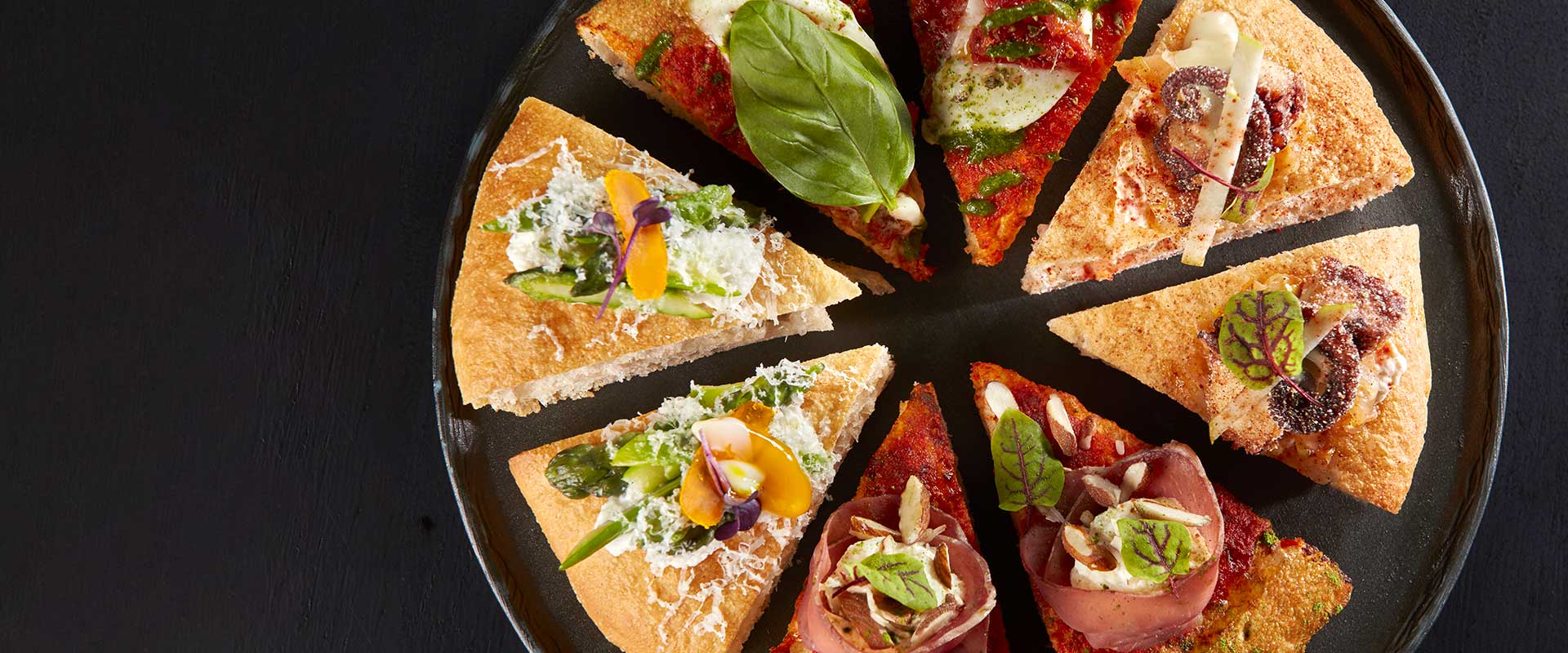
It is from this vision that creations like “La Villa Reale” are born. This pizza is a tribute to the elegance of Monza, represented by a combination of delicate and noble ingredients such as “Campazzo” cooked ham, artichokes cooked in hazelnut butter, apricot jam, black mulberry powder, and Fiore Sardo DOP. Everything is served in individually seasoned “slices” (spicchi), meaning diners naturally share the choice and enjoyment of the product.
Impact Design: pizza alone is not enough
However, innovating solely on the product is not enough to develop an innovative proposition that can have a real impact on both the market and the company.
The concept behind Era Pizza was crafted by harmoniously developing and integrating the various innovation levers that form the core of the Design phase.
Even today, all the partners constantly review or activate new levers to keep Era Pizza highly differentiated in the market and, consequently, difficult to replicate.
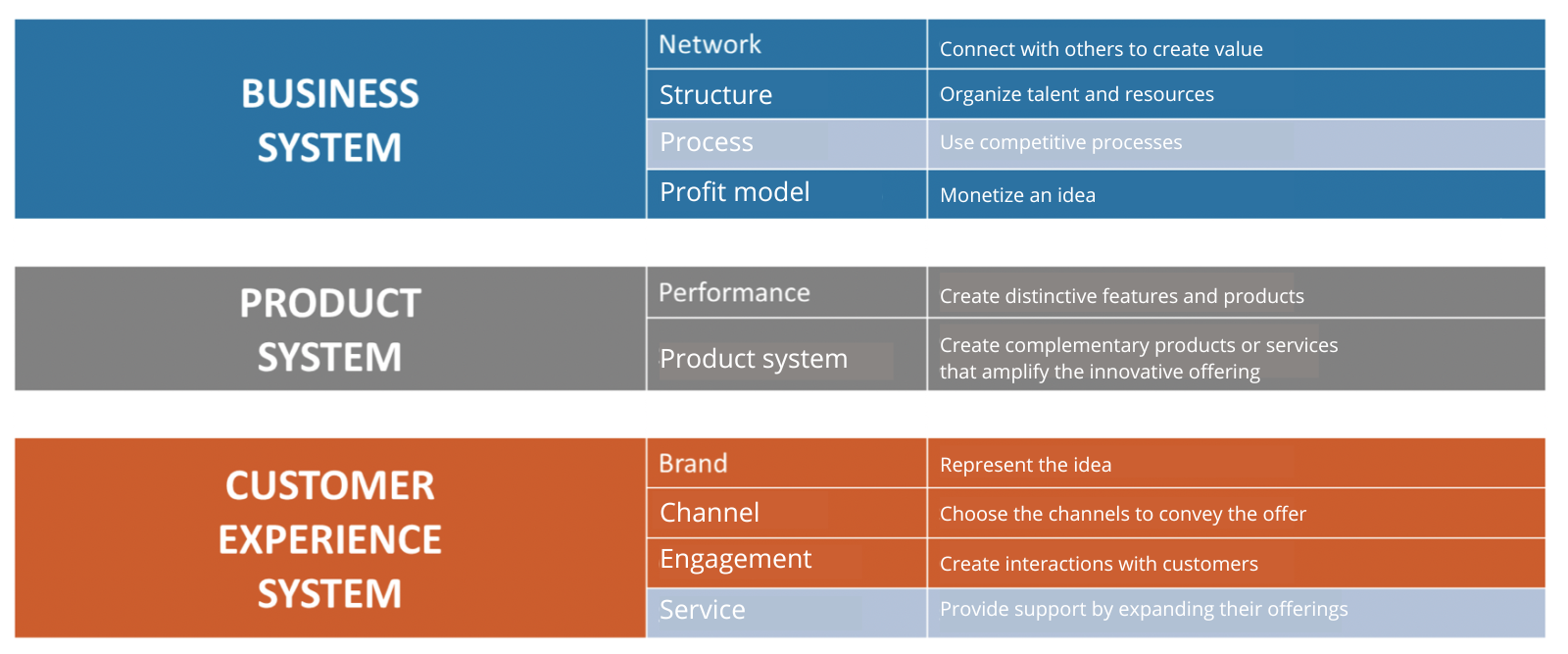
Let’s look at how Era Pizza’s high-impact proposition has been structured and how it has evolved over time:
1. Product System
- Performance: the “core” product, the pizza, is characterized by a masterful use of excellent raw materials, resulting in a flavorful and original dish that is light to digest and designed for sharing. A prime example is “Piemonte toccata e fuga” (Piedmont touch-and-go): built on a “Nuvola” dough base, this pizza is designed around Fassona beef tartare from the renowned “Cazzamali” butcher shop, garnished with anchovy cream, sunchoke (Jerusalem artichoke) chips, honey, red radicchio, smoked provola cheese, and chestnut powder.
- Product system: to complement the pizza, the menu features another product of excellence: gelato, with flavors that evoke tradition and utilize high-level ingredients. Over the years, this lever has been activated multiple times. For instance, to complement the standard menu, new pizzas called “Pop” were developed exclusively for Thursday dinners. Characterized by a lower price point compared to the gourmet pizzas on the menu, their primary goal is to attract the restaurant’s current “non-customers” who might not be drawn to the standard offering due to budget constraints. Another example is the option, recommended directly on the menu, to pair any dish with innovative cocktails, craft beers, and refined wines. This strengthens the connection between the “core” product and complementary items, thereby increasing cross-selling opportunities.
The latest addition to the main offering (dinner) was the introduction of a dedicated lunch menu available only on Mondays, Tuesdays, Thursdays, and Fridays, featuring burgers, salads, or classic pizzas. This successfully captured a new consumption occasion—lunch—that was previously untapped, as well as a customer segment outside the “original” target audience.
2. Business System
- Profit Model: alongside the classic one-off transactions that characterize restaurant activities, and to counter the long-tail effect of seasonal consumption dips, Era Pizza offers a series of customer contests linked to product consumption, launched right after the seasonal peak. This approach aims to drive customer traffic to the venue, with the goal of stimulating new consumption occasions and fostering customer loyalty.
- Network: to build a successful dining concept, it is vital to rely on a network of suppliers who share the same strategy. In line with their high-impact proposition, Era Pizza has, over the years, formed partnerships with local producers within the Slow Food Presidia network—organizations that prioritize ethics, organic methods, and local product quality over the fast-paced demands often imposed by today’s production dynamics.
- Structure: innovation is not left solely to the Chef’s inspiration. When designing new pizzas or unique pairings, all members of the kitchen staff (from the kitchen line to the pastry section) are actively involved in the idea generation and evaluation process. This culinary melting pot keeps the entire team engaged and invested in the innovation process, continuously stimulating their creative potential.
3. Customer Experience System
- Channel: the venue is the primary vehicle through which the offering is delivered to and experienced by customers, and Era Pizza’s space was designed to align perfectly with the partners’ vision for innovation. Housed in a former hat factory, space is understated, elegant, refined, welcoming, and modern, perfectly reflecting the concept of evolution they wished to convey;
- Brand and Engagement: the values communicated through the product are delivered to the market via a distinctive brand identity, leveraging various online communication channels (website, social networks, newsletters) and offline media (specialized magazines, local press features). Through social media channels in particular, the company seeks direct contact and engagement with its customers, encouraging them, for example, to share photos of the dishes they enjoy during dinner.
Impact Review: continuous iteration to achieve excellence
To maximize the impact of an innovative proposition on both the market and the business—and to use the Impact Review as a tool for competitive advantage, it is essential to design and execute multiple cycles of ideation, testing, and modification of the developed solution. At Era Pizza, every table features a simple card that customers can freely fill out to provide structured feedback by completing a printed questionnaire. The results are gathered, recorded, and analyzed monthly to identify critical issues that customers might face throughout their dinner, or to capitalize on untapped opportunities for innovation. Thanks to this continuous analysis, several changes have been implemented. These include minor adjustments to the restaurant’s lighting (which was perceived as slightly too dark) as well as incremental changes to the pizza dough preparation—such as placing a cold ingredient like burrata inside the dough rather than on top, since applying it raw on top caused the overall dish to be perceived as cold.
Era Pizza’s overall high-impact proposition successfully sustains and executes the vision for innovation developed over time. It stands as proof that when creativity and methods come together, great things can be achieved.
Since 2017, the four partners behind this business concept have never stopped, and the company has several plans in store to grow even further.
As Paul Gauguin once said, “Cooking requires a light head, a generous spirit, and a large heart”, and the entire staff at Era Pizza certainly does not lack head, spirit, or heart.
Article written by:

Riccardo Siciliani
former Manager Lenovys
He is a Manager in the Delivery Unit Strategy & Innovation at Lenovys, and manages projects related to the definition and implementation of corporate strategies, the innovation systems and application of Lean Product and Process Development principles with clients operating in the manufacturing, food & beverage and financial services sectors.
Read more

Upcoming events