



Innovation: When the Tortoise Beats the Hare

In the manufacturing sector, the hunt for waste has become a true mantra for many organizations, thanks in part to the publishing success of numerous books on the Toyota model and Lean philosophy, such as “Toyota Way. I 14 principi per la rinascita del sistema industriale italiano” (The 14 Principles for the Rebirth of the Italian Industrial System) by J.Liker and L. Attolico (Hoepli 2014).
Concepts like “zero defects” or the elimination of “rework” (even at the cost of stopping the production line) have entered everyday language, contributing to a significant improvement in manufacturing productivity.
In this regard, Taiichi Ohno, the founding father of the Lean method, stated:
“A slow but steady tortoise causes less waste and is much more desirable than a swift hare, who races ahead and then stops to doze. The Toyota Production System can be realized only when all the workers become tortoises”
However, when moving outside the scope of factory processes, these concepts are not yet as widely known and applied.
Identifying Waste in Innovation
To give an example, let’s look at the field of innovation: anyone who has been involved in innovation will have noticed that these activities often proceed in fits and starts. One month the focus is entirely on innovation, with exhausting brainstorming sessions, and immediately after, everything grinds to a halt for months, overwhelmed by day-to-day priorities. Alternatively, some potentially interesting ideas are not pursued because they are too far removed from the current business model and the top management’s vision for the sector.
These ways of operating represent the typical wastes also highlighted in the manufacturing sector:
- Muda – waste and loss: for example, waiting times and the underutilization of people’s potential
- Mura – unevenness and variability: for example, irregularity in the frequency of innovation activities and demands
- Muri – overburden: for example, the oversaturation of people’s workload
It is therefore no surprise that innovation results are often unsatisfying.
A study by Doblin Group shows that 96% of the innovations analyzed failed to pay back the cost of capital used to finance them.
Similarly, Booz & Company states that 66% of new products fail within two years of launch. Even more disheartening results come from a study by Stevens and Burley, which shows that you need to start with around 3,000 raw ideas to generate just one commercial success.
But is it truly possible to eliminate these wastes just as we do in manufacturing processes? In our experience, the answer is yes!
Here are some key elements to consider creating an innovation system capable of eliminating the typical wastes of innovation processes, allowing companies to generate high-impact innovations in a sustainable, scalable, and replicable manner.
1. Scheduled explorations
To identify high-impact innovation opportunities, it is necessary to look at reality differently from how everyone else sees it.
It is like trying to walk – in the opposite direction – down a one-way street that you have driven down thousands of times and know perfectly. You notice houses and trees that have always been there but that you had never noticed before.
Explorations serve this exact purpose: to make us see reality through different eyes.
You can start within your own sector by analyzing the pain points customers experience when using your products or services, or by considering why some customers choose alternative products over yours, to see what value elements can be incorporated into your offer. Alternatively, you can explore trends to see which ones could revolutionize your industry. In this phase, training yourself to follow different patterns helps simulate different ideas.
Regardless of the chosen exploration path, it is crucial that these exploration phases take place at pre-established intervals, every six, four, or three months. This eliminates some of the typical wastes of the innovation process, allows people’s time to be allocated in advance to generating high-impact innovations, and, above all, reduces process variability.
Indeed, it is impossible to know in advance when the team will identify a high-impact proposal. If these events are not managed with the right frequency, you risk moving forward with low-value ideas simply because they are the only ones available at that moment.
2. Minimum Effective Dose
Managing explorations at regular intervals will lead to a volume of ideas far greater than what you are typically used to handling. Therefore, it becomes essential to learn how to develop ideas according to the so-called Minimum Effective Dose (MED), that is, the minimum amount of effort required to further evolve an idea into a high-impact proposal. It is necessary to identify the most promising proposals to be developed through successive refinements.
In the beginning, you will refine many high-impact proposals, which will gradually be winnowed down to focus efforts on the most promising ones. This allows you to eliminate two types of waste:
- On one hand, even the proposals furthest from the current business model are initially developed with very little effort. In the projects I have managed for clients, it has happened more than once that ideas initially viewed as unpromising became our flagship projects thanks to subsequent refinements.
- On the other hand, it allows you to capitalize on the knowledge generated. The developed proposals that you decide to shelve are removed from the process, thereby reducing work-in-progress (WIP) inventory, but can easily be picked up again in the future if changes in the environment make them relevant.
3. Broad Spectrum Solutions
We have already discussed the importance of developing broad-spectrum solutions rather than just products. A broad-spectrum solution is one that integrates product features with elements of the Business System – how the solution is produced and how it generates profit –as well as elements of the Customer Experience System, meaning the experience the customer has throughout the entire lifecycle of using the solution.
A broad-spectrum solution is much harder to copy, as a competitor would have to replicate not only product features but also elements related to the business model, sales channels, and so on, which are much more difficult to duplicate in the short term.
It is best to start developing your high-impact proposals right from the beginning with a broad-spectrum solutions mindset.
Designing the product from the very start alongside customer Experience and the appropriate Business System elements ensures that the team does not focus solely on the product itself. Instead, it drives them to focus on how to maximize impact for both the customer and, simultaneously, the company.
4. Concept Paper
Before starting the actual development of the product, it is essential to clearly define the requirements that the broad-spectrum solution must meet to be successful in the market. The value of this document lies not so much in the document itself, but rather in the process of building it.
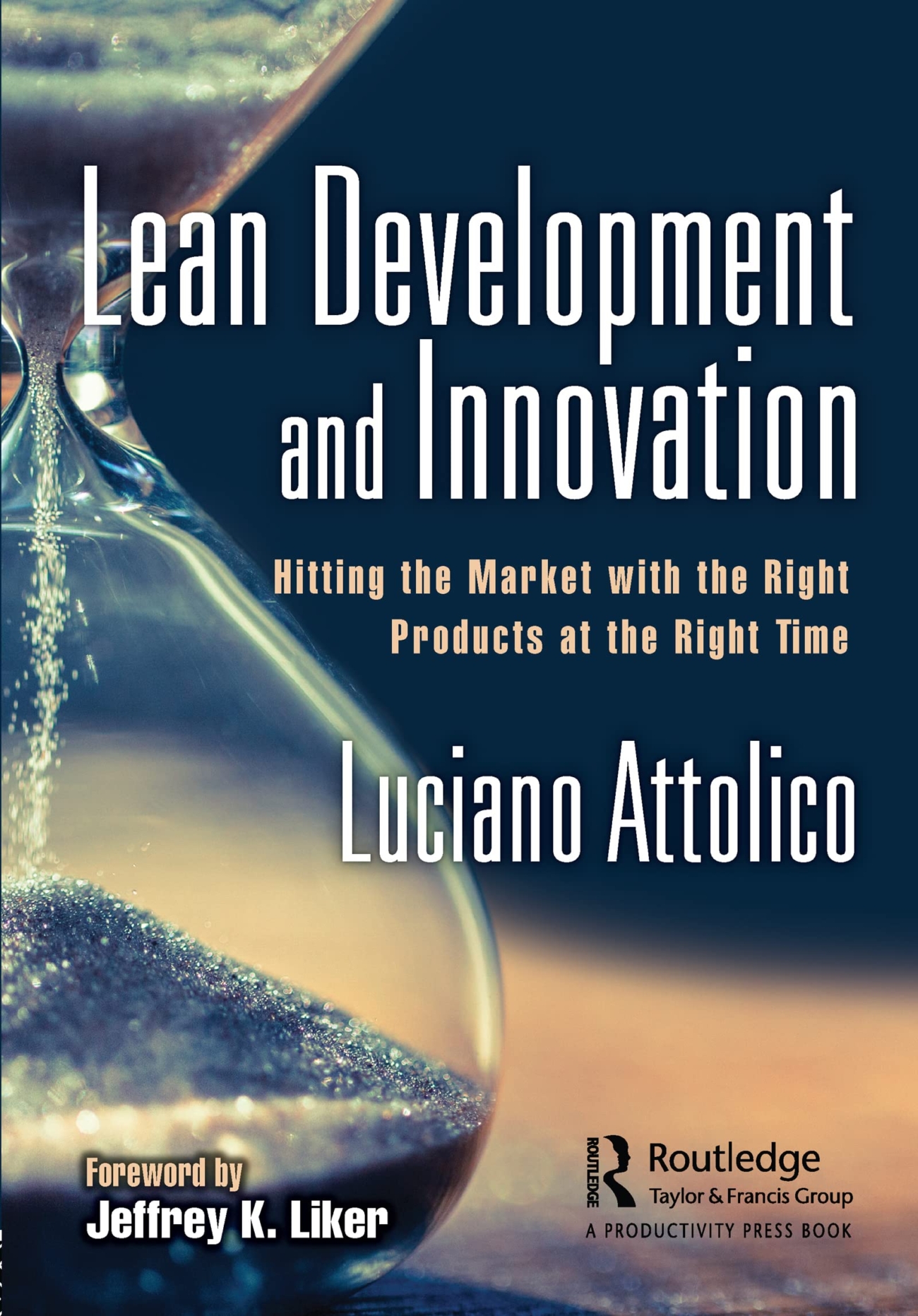
As described by Luciano Attolico in the book “Lean Development and Innovation: Hitting the Market with the right Products at the Right Time” (Productivity Press 2018)
“The main objective of the Concept Paper is to align processes, people, and tools before starting any project activity. Putting what lies ahead in writing prior to product development, through a structured sharing process, […] can hold immense value, particularly when one can delve deep into the social aspect of sharing and formalizing the key points necessary to clarify customer needs. […] Striving to synchronize and, above all, align all answers before starting the project becomes strategic. This is because you realize that, otherwise, unresolved problems and conflicts would just be waiting to resurface later on in the subsequent phases of the project.”
Anyone who has participated in the development of a new product will have experienced that unpleasant feeling of having to redo part of the work already done due to the emergence of constraints that went unidentified during the initial phase of the project. Typically, these constraints were known to certain company departments which, however, were not involved during the requirements definition phase.
Aligning and involving all relevant departments in defining the requirements of the product to be developed, before starting the actual development, allows you to resolve potential conflicts between contrasting goals on paper, speed up new product development, and reduce waste related to rework in the advanced stages.
5. Multi Project Management
Conventional Project Management relies on defining highly detailed plans and attempting to adhere to them. However, it is common experience that these extremely detailed plans represent how we wish the project would go, not how it is.
The uncertainty and variability that characterize innovation projects – and even more so, high-impact innovation projects – require companies to build increasingly Lean project management systems based on modern SCRUM techniques.
Thanks to SCRUM-based approaches, it is possible to manage development projects in a simple and visual way, breaking down individual projects into small blocks of work. At the end of each block, teams can gather feedback and information on how to progress with development.
Unlike traditional project planning and management systems – where dedicated people spend their time solely updating Gantt charts – SCRUM is based on iterative cycles of development and feedback loops, with productivity increases ranging from 200% to 800% (see “Scrum: The Art of Doing Twice the Work in half the Time” di Jeff Sutherland).
An innovation system is the only way to make the innovation process scalable, sustainable, and replicable, tackling waste just as the manufacturing sector has been doing for years. We just need to be willing to take on the challenge!
Article written by:

Gabriele Colombo
Know How & People Development
He has developed his skills especially in the field of innovation according to the logic of design driven by applying the concepts in the area of research and development in companies of international character. He was responsible for the definition, planning and execution of research and consultancy programmes related to the world of innovation and continuous improvement; His experience is added to the role of teacher of Project Management and Innovation Management in courses dedicated to business executives at the School of Management of the Politecnico di Milano.
Partner of Lenovys since 2021.
Read more


Upcoming events