





Want to innovate? Don’t try to do something “new”

One of the most widespread beliefs, which severely limits true innovation, is that you must create something completely new and unprecedented to succeed in the market. This belief is disproved by an objective analysis of the world’s most successful innovation cases. Let’s look at a couple of examples well known to the public.
Who invented the MP3 player? And who created social networks? Did you answer Apple and Facebook?
Too bad that’s not the correct answer, though you are in excellent company! Neither Apple nor Facebook were the first to launch the MP3 player or the social network, even if many people think so.
The first MP3 player was introduced for the first time at Hanover CeBIT in 1998 by the Korean company Saehan Information.
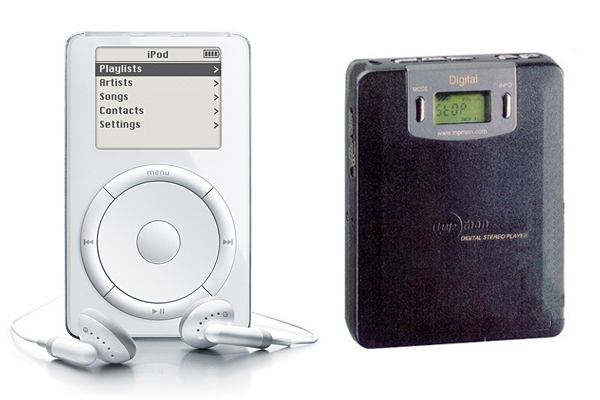
The player was called the MPMan F10; it featured a 32MB hard drive and cost around 250 dollars. Apple entered the market with its iPod a full three years later, in 2001, just a few months after the release of the first version of iTunes. At that time, audio tracks converted into MP3 format via iTunes could also be loaded onto other MP3 players. By then, several MP3 players were already on the market, such as Diamond’s Rio PMP 300 or Compaq’s Personal Jukebox PJB 100, in addition to the MPMan F10.
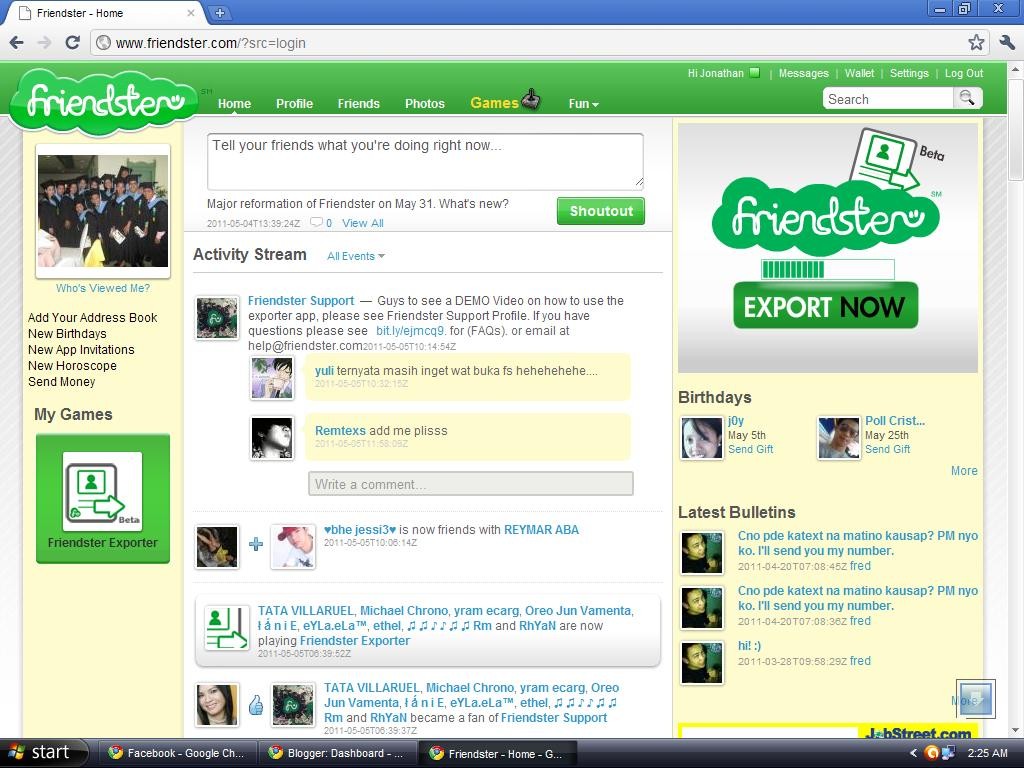
The first expression of a social network, as we know them today, dates back instead to 2002, the year Friendster was launched by Jonathan Abrams.
Friendster’s goal was to bring together people who knew each other in real life within a safe virtual environment where they could share their personal profiles. Friendster quickly reached 3 million users, capturing the attention of the mainstream press as well.
Even greater success was achieved by MySpace. Founded in 2003 as a rival-clone of Friendster, MySpace became the first mass social network, reaching 20 million users between 2005 and 2006. Facebook, on the other hand, was launched “only” in February 2004, two years after the very first social network.
Is novelty an essential factor?
These stories demonstrate that novelty is not an essential factor for generating successful innovation.
The iPod was not the first MP3 player; it wasn’t something new. Facebook was not the first social network; it wasn’t something new.
Yet, the iPod and Facebook changed the way we listen to music on the go and how we use social networks, allowing their respective companies to become leaders in their industries.
In other words, being focused on developing something new is less important than developing something that has a real impact on the customer and adds true value to their life.
Companies don’t need to “simply” innovate, in the sense of just doing something new.
Companies need to drive high-impact innovation!
Only by pursuing the path of high-impact innovation can companies survive and thrive over time, ensuring a bright future.
Threats and challenges to corporate survival and prosperity have multiplied
A study by the Olin Graduate School of Business estimates that 40% of the companies currently in the Fortune 500 will no longer exist in the next 10 years. Richard Foster of Yale University states that the average lifespan of an S&P 500 company has dropped from sixty-six years to just fifteen.
Doing something new is no longer enough to survive and thrive. The path forward is high-impact innovation.
But what exactly do we mean by high-impact innovation?
High-impact innovation is defined as an offering (rather than a product) characterized by a viable business model and, at the same time, by a high impact both for the customers who adopt it and for the company that offers it.
There are three key elements of high-impact innovation:
- An offer: I see too many companies focusing solely on the product. Impact, however, is achieved through offerings that include, in addition to the product/service, the systems through which these products/services are brought to market, and the systems and processes through which they are created. For example, think of Apple Stores or Nespresso Points as systems that add enormous value to the products sold by both companies (systems to bring products/services to market), or the lean production systems developed by Toyota that allow the company to enjoy unparalleled profitability in the automotive sector (systems for creating products/services).
- A viable Business Model: innovation isn’t truly innovation unless it reaches the market. An offer that fails to reach the market is not an innovation, but an invention. It is necessary to carefully design the business model so that the offering can reach the market and contribute to the company’s goals.
- Impact for both customers and the company: the offering brought to market must be relevant to a group of customers and deliver a result in terms of functionality, emotion, or status that is superior to any rival solution. The innovation must add so much value to customers’ lives that it leads them to change their behavior, driving them to abandon competing solutions in favor of the proposed innovation. This is how impact is achieved, both for the customers and for the company proposing the innovation. Ultimately, if the business model is well-designed, the impact on the customer must translate into an impact by the company. Customers love these innovations so much that they reward the company with above-average sales.
It is only natural then to wonder: if novelty is not the factor to focus on, what should we direct our attention to achieve high-impact innovation?

One thing to clarify first is that people are not interested in buying products for their own sake. People buy products and services to complete a task or achieve a goal. In literature, this concept is known as Job-To-Be-Done.
A famous example comes from Theodore Levitt :
“People don’t want a quarter-inch drill bit. They want a quarter-inch hole.”
Once this basic assumption is clarified, it is possible to define two major areas of analysis for developing high-impact innovations:
Creating an offering that performs an existing “job” significantly better than competitors’ offerings
The first area to focus on for high-impact innovation is creating an offer that executes a job decidedly better than competitors. This is precisely the case for the iPod and Facebook.
Thanks to the hardware-software pairing (iPod and iTunes), the iPod was able to perform the job of “listening to music on the go” vastly better than rival solutions. With iTunes, users could directly purchase their favorite songs, easily organize tracks into playlists, and quickly sync them with their iPod device. With competing products, however, users had to buy entire music albums, convert the tracks into MP3 format, organize their favorite songs into folders, and copy those folders onto the portable device. Furthermore, when songs were added to individual folders, syncing the device meant either remembering exactly which songs had been added or recopying the entire folder. It is clear how the iPod and iTunes allowed these actions to be carried out much more easily and intuitively.
It is no coincidence that iPod sales skyrocketed between late 2003 and early 2004, specifically when the iTunes Store was launched and iTunes was made available for Windows as well.
In fact, sales in 2004 were seven times greater than the total sales of the first two years following the iPod’s launch.
The same applies to Facebook. MySpace already had a massive user base, but interactions and dialogues between users were complex. For instance, to write to someone, you had to go to their page and leave a message. To reply to a message, you couldn’t respond directly from your own wall; you had to visit the wall of the person who had left the message. As a result, it was very easy to lose track of a conversation.
Facebook, on the other hand, made communication extremely simple, not to mention the ability to tag photos, which was undoubtedly one of Facebook’s winning features. This was because conversations were displayed in chronological order and remained perfectly clear even after time had passed.
Today, Facebook has around 1.65 billion users. MySpace, by contrast, had to cut its staff by about 50% in 2011 and was sold for a mere 35 million dollars to Specific Media, an advertising specialist company.
Creating an offering for a new “job”
A second area to focus on, instead, is creating an offering to perform a Job for which no supporting products or services currently exist.
This is the case, for example, with Nintendo and the launch of the Nintendo Wii. Prior to its launch, the most famous consoles, such as Sony’s PlayStation and Microsoft’s Xbox, supported a very specific job, namely: “individual entertainment by immersing young gamers in a virtual world.”
All the gaming action relied on the player’s passive immersion in a virtual world. Anyone who wanted to play and have fun in a group, or even more so as a family, had no way of doing so except by turning to older games like bingo or cards, or by going outdoors to have fun, perhaps organizing a game of tennis or golf.
Playing golf or tennis as a family, at home, maybe on Christmas Eve, just wasn’t feasible.
The Nintendo Wii, on the other hand, enabled this new type of Job: “active, physical, and indoor entertainment for anyone.” Thanks to the Wii’s revolutionary controllers, anyone could enjoy a game of tennis, golf, or any other sport with little effort, all while staying indoors. The Nintendo Wii was an extremely successful product that allowed the company to emerge from a severe crisis and capture the leadership position within the console market.
Whether you have developed new technology, a new idea, or any other trigger for innovation, you must try to understand which job can be improved or introduced to the market. Otherwise, the risk is failing to develop high-impact innovation despite the quality of the idea.
MP3 players, just like social networks, were great ideas! Only those who thought in terms of customer impact truly managed to benefit from the potential of their innovation.
It is not an easy journey, but it is the only one that truly leads to sustainable results, as demonstrated by the companies we have had the pleasure of collaborating with in implementing high-impact innovation systems.
The choice is yours: do you want to do something “new,” or drive high-impact innovation for your companies and your customers?

Read more



Upcoming events