



Innovation Manager: the decree is here… But what about the process?
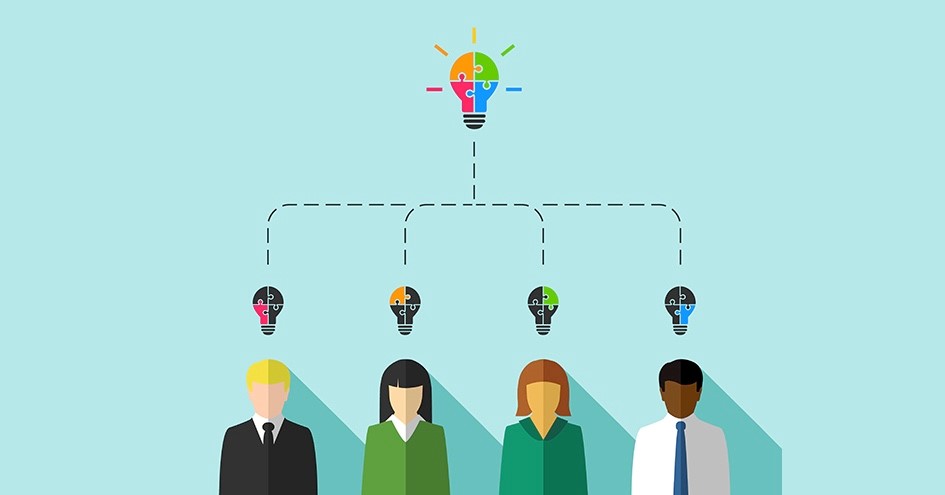
On May 10, 2019, the Ministry of Economic Development (MISE) approved the decree granting a voucher to cover up to 50% of the cost of an Innovation Manager, capped at €40,000 per company (primarily SMEs). It is undoubtedly an important initiative aimed at supporting business growth and innovation development, an essential factor for surviving and thriving in today’s market.
So, can we consider the problem of innovation solved?
Can we simply hire or appoint an Innovation Manager and finally innovate our products and services the way we’ve always dreamed?
Unfortunately, that’s not the case, and the scenario is set to get even tougher!
Innovation today is extremely complex. More complex than it has ever been in the past.
On one hand, barriers to entry have fallen: anyone with a PC and an internet connection can build multi-million-dollar innovations. On the other hand, there is a growing race among companies to innovate, constantly launching new products and services into the market.
The result? Simply “innovating” is no longer enough. “Simple” innovation has become a commodity, and it’s no longer sufficient to survive and prosper.
A single manager’s effort isn’t enough
Innovation becomes true innovation, and unleashes its full potential, when it allows a company to stand out and differentiate itself from what is already on the market by offering a specific group of customers a functional, emotional, or status result superior to any rival solution.
In other words, the kind of innovation capable of delivering tangible and sustainable benefits to companies is what we call High-Impact Innnovation.
In today’s context, simply talking about innovation isn’t enough anymore. We need to talk about High-Impact Innovation!
This type of High-Impact Innovation is extremely complex to manage, and it is unreasonable to expect it to be the result of the work and efforts of a single individual like the Innovation Manager, no matter how talented or capable they may be.
To achieve High-Impact Innovation, companies must combine elements of technical excellence, methods, and processes with elements of social excellence, human behaviors, and habits – topics explored and developed every year during the Executive Master Impact Innovation.
Some companies have decided to embrace this challenge and are starting to reap the rewards. This is the case, for example, with Zhermack, which has managed to create a true innovation “assembly line.”
The Process: Impact Innovation Workshops
For those who are just starting out on this journey, the first step is undoubtedly to design structured methods that help people think differently and develop opportunities to stand out from what has been done so far.
A “simple”, yet highly effective, element of technical excellence to achieve this goal is represented by Impact Innovation Workshops. Impact Innovation Workshops are the structured way to introduce into a company an effective, sustainable approach for developing high-impact innovative proposals and solutions. They stand out (and differ from traditional brainstorming) due to 4 key elements:
1. Preparation
During the preparation phase, attention must be focused on 4 elements.
The first is undoubtedly team composition. If I want to capture every facet of value for the customer – not only at the product level, but also at the user experience level – I need to build a team that brings together knowledge and skills about what lies “outside.”
Therefore, it is necessary to build a multidisciplinary team that includes key roles from R&D, Marketing, Sales, Customer Service (a huge source of inspiration, as they are in daily contact with customer pain points), Engineering, Supply Chain, and Production.
The second crucial – yet often overlooked – element to define before launching an Impact Innovation Workshop is boundaries. It is essential to provide the team with clear guardrails: people need to know what is permitted and what is not, especially when navigating unfamiliar territory that departs from their usual way of working. Otherwise, there is a risk that they will either stick too close to what is safe and familiar or engage in wild flights of fancy that could lead to frustration if their proposals are ultimately rejected by the company.
Setting boundaries and constraints is a positive driver, not an obstacle, for generating new ideas, and it prevents a waste of time and energy.
The third element is identifying non-customers. Einstein famously said that “We cannot solve our problems with the same thinking we used when we created them.” In other words, if I have always focused exclusively on my existing customers without achieving significant innovation results, continuing to focus on them will hardly reveal opportunities for differentiation and high-impact innovation.
This was the case for Sammontana: instead of focusing on current customers, people who already eat ice cream, they focused on non-customers, namely those who cannot or choose not to eat traditional ice cream. This led to the creation of “Amando,” a dairy-free ice cream made with almond milk for lactose-intolerant consumers, which still retains all the creaminess and taste of Sammontana’s heritage.
Finally, the fourth element involves exploration. Explorations, conducted together with the project team, help us look at the world through fresh eyes, searching for compromises that customers are forced to endure among alternative solutions, and identifying opportunities linked to technological or socio-cultural trends that can generate high-impact innovations.
This is not an activity that can be outsourced to an external third party. The project team itself must gather insights into the challenges and pain points that current products or services present, especially to non-customers. It is precisely from these insights that impactful proposals emerge to convert non-customers into loyal users.
2. Workshop Launch and Duration
Impact Innovation Workshops typically last between 4 and 6 hours.
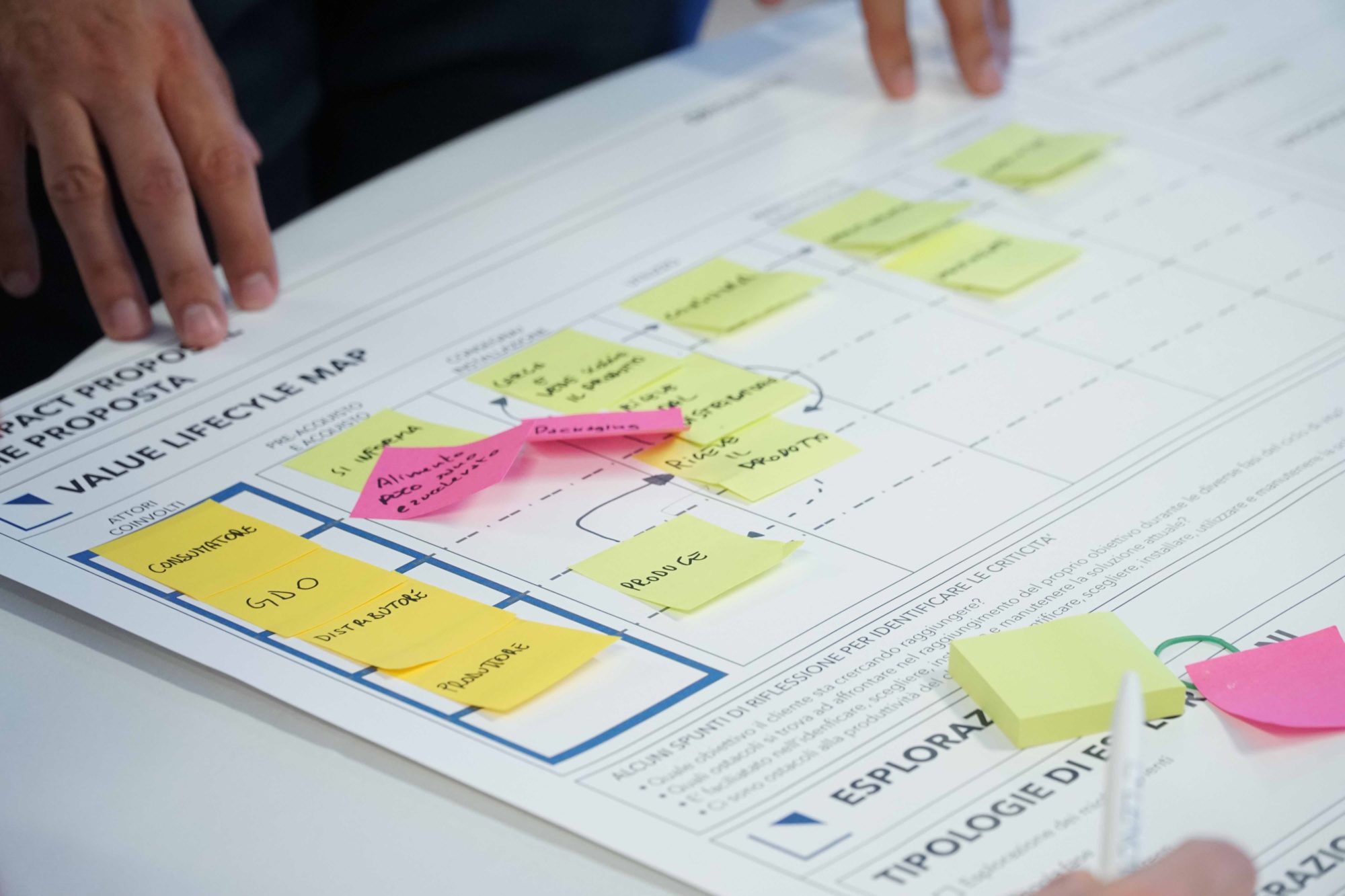
The first recommendation is to dedicate the initial part of the workshop to outlining and summarizing the main insights gathered from the explorations for the team.
A second recommendation: make these insights as visual as possible. Our short-term memory can only hold between 5 and 9 pieces of information at a time, and only for a short duration. Explorations usually generate a substantial volume of data, so the more visual and readily available we make this information to the team, the more effective the entire exercise will be.
3. Reworking in small groups
Unlike traditional brainstorming sessions, it is best to avoid starting the generation of high-impact innovation proposals in a plenary setting.
Working in small groups is far more useful and productive. When exploring contexts further removed from everyday operations, ideas need time to gain traction. Fostering them within smaller group dynamics increases the opportunity for open discussion, clarification, and debate. It also helps even the most unconventional, cutting-edge ideas develop into more solid concepts.
As a general guideline, for each exploration, each mini team can generate anywhere from 3 to 8 innovation proposals.
4. Plenary sharing
The purpose of plenary sharing is no longer to generate ideas, but rather to gather contributions from the broader team to improve and further develop the proposals sparked within the smaller teams. At this stage, it is essential to push team members to highlight the following elements for each proposal:
- What are the value elements of the proposal, and why could it be interesting? It is usually easier to find reasons why an innovation won’t work or can’t be done. However, at this stage, it is crucial to ask why it could be valuable. If a proposal has clear value, finding the means and energy to work on its feasibility becomes much simpler.
- What risks could cause it to fail, and therefore need further investigation? These elements act as fuel to further refine the proposals and make them more robust.
- What contribution can I make to the solution to make it even better? This element aims to leverage the input of all team members to evolve these impactful proposals
It is worth emphasizing that, following an Impact Innovation Workshop, there is far more work to be done than what was required to generate the initial High-Impact Innovations. Typically, 2 to 3 Impact Innovation Workshops are needed to explore different directions.
The generated proposals must then be filtered, further developed into solutions (for instance, through a Concept Paper), and “stress-tested” to evaluate their strength and viability.
The Impact Innovation Workshop is the first step toward approaching High-Impact Innovation in a structured and systematic way.
As an old African proverb says, “A journey of a thousand miles begins with a single step.”
Article written by:

Gabriele Colombo
Know How & People Development
He has developed his skills especially in the field of innovation according to the logic of design driven by applying the concepts in the area of research and development in companies of international character. He was responsible for the definition, planning and execution of research and consultancy programmes related to the world of innovation and continuous improvement; His experience is added to the role of teacher of Project Management and Innovation Management in courses dedicated to business executives at the School of Management of the Politecnico di Milano.
Partner of Lenovys since 2021.
Read more


Upcoming events